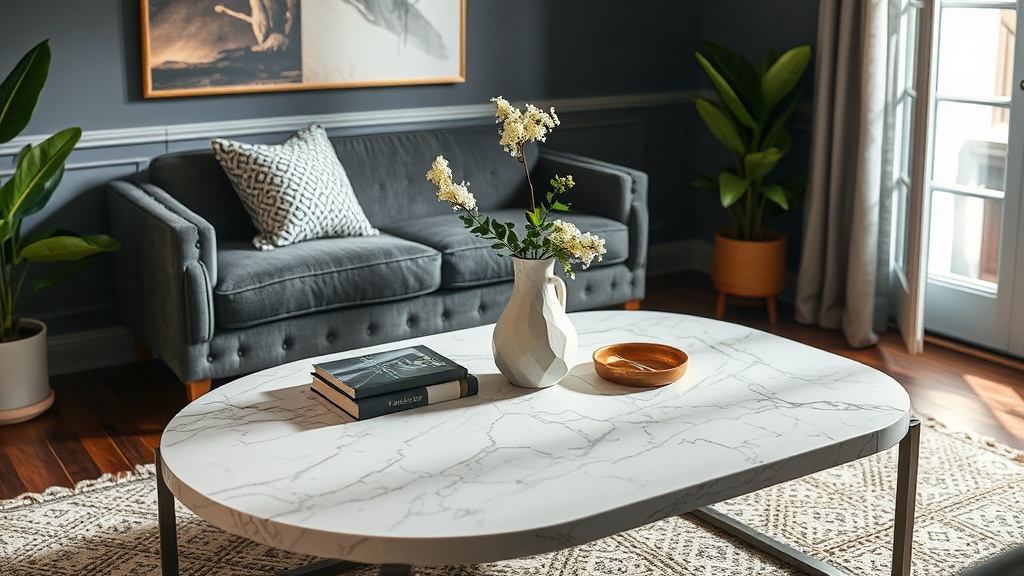
How to Refresh Your Old Coffee Table with Peel and Stick Marble

That scratched, dated laminate coffee table sitting in the center of your living room doesn't need to be replaced with a high-end stone piece to look expensive. If your current table has water rings, peeling veneer, or a color that clashes with your new rug, you can completely transform its surface using peel and stick marble contact paper. This method provides a high-end, polished look for a fraction of the cost of real marble and can be completed in a single afternoon with basic household tools. This guide covers the exact steps to prep, apply, and seal marble vinyl to ensure a professional, bubble-free finish that stands up to daily use.
Gather Your Supplies
Before you start cutting, ensure you have all the necessary tools laid out on a clean workspace. Precision is the difference between a DIY project that looks "homemade" and one that looks like a custom furniture piece. You will need the following:
- High-quality marble contact paper: Look for "thickened" or "architectural" vinyl rather than thin stationery-grade paper. Brands like d-c-fix or various heavy-duty marble decals found on Amazon offer better texture and opacity.
- Isopropyl alcohol (70%): Essential for removing every trace of oils and dust.
- X-Acto knife or precision utility knife: You need a very sharp blade to make clean cuts around edges.
- Metal squeegee or a credit card: This is used to push air bubbles out as you apply the vinyl.
- Hairdryer: A heat tool is critical for stretching the vinyl around corners and edges.
- Measuring tape and a heavy-duty ruler: Accuracy in your measurements prevents wasted material.
- Microfiber cloth: For lint-free cleaning.
- Painter's tape: To hold edges in place during the drying/setting process.
Step 1: Surface Preparation and Cleaning
The most common reason peel and stick projects fail is poor surface preparation. If there is any residual wax, furniture polish, or even microscopic dust on your coffee table, the adhesive will fail, causing the edges to lift within weeks. Even if your table looks clean, you must perform a deep clean.
First, clear the table of all decor. Use a standard household cleaner to remove any sticky residue or stains. Once the surface is dry, soak a microfiber cloth in isopropyl alcohol and wipe the entire surface down. This step is non-negotiable. The alcohol breaks down any remaining oils that soap and water might leave behind. Let the surface air dry completely. If you have a textured surface, such as a heavy wood grain, you may want to lightly sand it with 220-grit sandpaper first to create a flatter plane for the vinyl to sit on. A smoother surface ensures fewer visible imperfections through the marble pattern.
Step 2: Measuring and Cutting the Vinyl
Do not attempt to cut the vinyl while it is already on the table. This is a recipe for crooked edges and uneven seams. Instead, lay your contact paper out on a flat floor or a large dining table.
Measure the length and width of your coffee table top. Add at least two inches of "overage" to each side. For example, if your table is 48 inches by 24 inches, cut your vinyl to 50 inches by 26 inches. This extra material gives you a margin of error for trimming and allows you to wrap the vinyl around the edges of the table for a seamless, professional look. Use your metal ruler and X-Acto knife to ensure your lines are perfectly straight. A jagged cut at the beginning will be magnified once the material is applied.
Step 3: The Application Process
This is the most technical part of the project. To avoid air bubbles, you must work in stages rather than trying to lay the entire sheet down at once.
- The Center Alignment: Peel back only the first two inches of the backing paper from one end. Align this edge with the edge of your table.
- The "Peel and Squeegee" Method: Use your hand or a credit card to press the edge down. Slowly, with your other hand, peel the backing away from the top, moving only an inch or two at a time. As you peel, use the squeegee to press the vinyl onto the table, moving from the center outward toward the edges. This pushes the air out as you go.
- Managing Bubbles: If you see a bubble forming, do not ignore it. Stop immediately, peel the vinyl back slightly, and re-apply. If a bubble is stubborn, you can use a tiny sewing needle to prick a microscopic hole in the vinyl, then use the squeegee to push the air out through that hole.
- The Second Half: Repeat this process for the rest of the table. Ensure you are working in small increments to maintain control over the tension of the material.
Step 4: Wrapping the Edges and Using Heat
A coffee table looks unfinished if you can see the raw edges of the contact paper. To get that high-end, wrapped-around look, you will need to use your hairdryer.
Once the top surface is smooth and bubble-free, use the hairdryer on a medium heat setting to warm the edges of the vinyl. Heat makes the vinyl more pliable and "stretches" it slightly. While the material is warm, use your fingers or a squeegee to wrap the vinyl over the edge and down the side of the table. This ensures the material hugs the corners tightly without creasing. If your table has a decorative lip or a bevel, take your time with the heat; the warmth allows the vinyl to conform to the shape rather than fighting against it. Once the edge is wrapped, press it firmly with your thumb to ensure a strong bond.
Step 5: Final Trimming and Sealing
Now that the vinyl is wrapped around the sides, it is time for the final trim. Use your X-Acto knife to trim any excess material hanging off the bottom of the table. To ensure a clean line, hold the blade at a 45-degree angle against the underside of the table edge. This prevents the blade from slipping and creates a neat, tucked-in edge.
To protect your work, consider applying a clear furniture wax or a specialized liquid sealant over the edges. While most high-quality marble contact papers are water-resistant, the edges are the most vulnerable points. A thin layer of clear coat or even a bit of furniture polish on the wooden sides (not the marble surface itself) can help prevent the edges from catching on clothing or lifting during use. This step is particularly important if you have children or pets who might bump into the table frequently.
Styling Your New Marble Surface
Now that your coffee table looks like a heavy piece of Carrara marble, you need to style it to match the aesthetic. Since marble is a "cool" and "heavy" visual element, you want to balance it with textures that add warmth to your living room.
Avoid placing heavy, dark objects directly on the marble without a buffer, as this can sometimes make the surface look cluttered. Instead, try these combinations:
- Organic Textures: A wooden tray or a woven seagrass basket creates a beautiful contrast against the smooth, white marble. This is a great way to implement natural textures in your living space.
- Metallic Accents: Gold or brass candle holders and small sculptures pop beautifully against a marble background, giving the room a sophisticated, layered feel.
- Greenery: A simple ceramic vase with fresh eucalyptus or even high-quality faux greenery adds life and color to the neutral stone surface.
Maintenance Tips for Longevity
To keep your marble-look coffee table looking pristine, follow these maintenance rules:
- Use Coasters: Even though the vinyl is water-resistant, constant moisture from a cold glass can eventually seep into the seams. Always use coasters for drinks.
- Avoid Abrasives: Never use steel wool or harsh scouring pads to clean the surface. Use a soft, damp cloth with a mild soap solution.
- Heat Protection: While the vinyl is durable, it is still a plastic-based product. Avoid placing extremely hot items, like a boiling teapot or a hot pizza pan, directly on the surface, as this can melt or warp the film.
Transforming your furniture doesn't require a trip to a high-end showroom. By using a few inexpensive tools and a bit of patience with the heat-and-wrap technique, you can elevate your living room's aesthetic for less than $20. This small change can make your entire seating area feel more cohesive and expensive, proving that great design is about resourcefulness, not just your bank account.
Steps
- 1
Clean the Surface Thoroughly
- 2
Measure and Cut the Contact Paper
- 3
Apply with a Squeegee to Avoid Bubbles
- 4
Trim the Edges with a Precision Knife