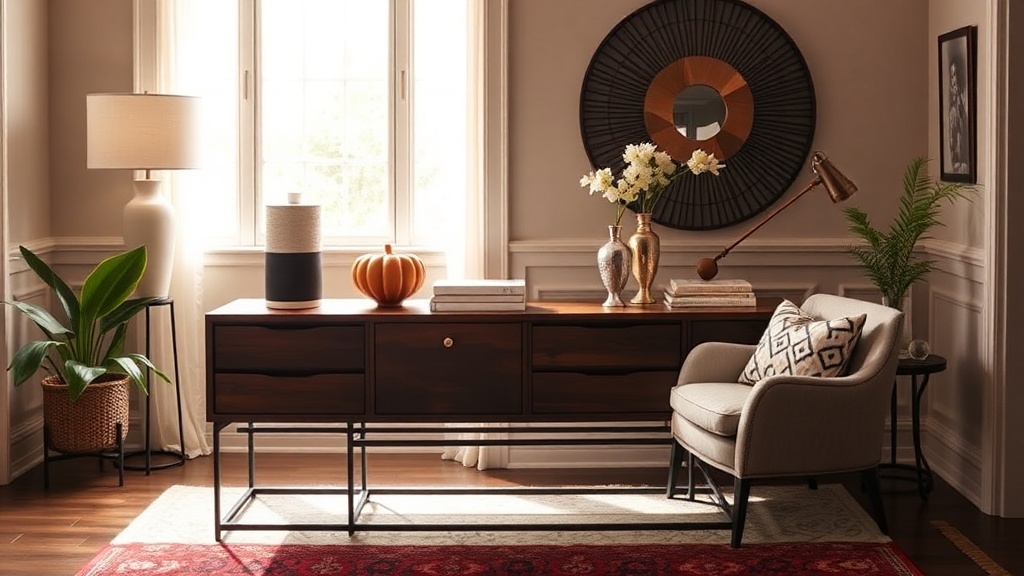
Elevate Your Entryway with a Curated Console Table Setup

In this post, you'll learn how to select, style, and organize a console table to create a high-end look for your entryway on a strict budget. We will cover the fundamental rules of scale, how to layer different textures, and how to mix vintage finds with modern staples to create a cohesive, welcoming first impression.
What Size Console Table Do I Need?
The ideal console table should be roughly two-thirds the width of the wall or the space it occupies to ensure it looks intentional rather than cramped or lonely. If the table is too small, it looks like an afterthought; if it's too large, it blocks the natural flow of traffic in your entryway.
I always tell my clients to measure twice—once for the actual table and once for the "breathing room" around it. You need at least 12 to 18 inches of clearance on either side if the table sits in a high-traffic hallway. If you're working with a tight nook, don't feel pressured to buy a massive piece. A slim, narrow table from a place like IKEA can work wonders if you style it with height.
Think about the height, too. A standard console table is usually about 30 inches tall. If you have high ceilings, you'll want something with a bit more visual weight or a taller lamp to bridge the gap between the furniture and the ceiling.
Pro Tip: Use painter's tape to outline the footprint of the table on your floor before you buy anything. It’s a cheap way to see if the scale works with your existing entryway-sized rug or doorway.
How Do I Layer Decor Like a Professional?
Layering is the secret to making a surface look "designed" rather than just cluttered. You want to combine items of varying heights, textures, and shapes to lead the eye around the display.
Start with your "anchor" piece. This is usually the largest item, like a tall lamp, a large vase with branches, or a piece of art leaning against the wall. Once that anchor is set, you can add secondary layers.
Here is my favorite way to build a layered look from the ground up:
- The Foundation: Start with a tray or a stack of books to create a base.
- The Height: Add one tall item (like a lamp or a vase) to one side to break the horizontal line.
- The Texture: Incorporate something organic, like a wooden bowl or a stone object.
- The Detail: Finish with small, tactile items like a brass candle snuffer or a small ceramic dish for keys.
I'm a huge fan of the "Rule of Three." Grouping items in odd numbers—three, five, or even seven—feels more natural to the human eye than even numbers. If you have two lamps, place them symmetrically for a formal look. If you only have one, place it off-center and balance it with a tall plant on the other side.
Don't be afraid to mix your eras. A sleek, modern metal tray looks incredible when paired with a weathered, vintage wooden box. This contrast is what makes a home feel lived-in. If you want to see more on how to mix styles without looking messy, check out my post on 17 budget home decor ideas that look expensive.
How Much Does a Styled Entryway Cost?
A well-styled entryway can cost anywhere from $0 to $500 depending on whether you shop at thrift stores or high-end-boutiques. You don't need a massive budget to achieve a designer look; you just need a strategy for sourcing.
I’ve spent many Saturday mornings at Goodwill or local estate sales hunting for the perfect brass tray or heavy ceramic vase. Often, a $4 piece of "junk" can be transformed with a bit of gold spray paint or a deep cleaning.
| Item Type | Thrifted/DIY Strategy | Estimated Cost |
|---|---|---|
| Anchor Piece (Lamp/Vase) | Find a vintage vessel; add fresh greenery. | $5 - $15 |
| Texture (Trays/Bowls) | Search for wooden or marble trays at thrift stores. | $3 - $10 |
| Visual Interest (Books) | Remove dust jackets from old hardcovers. | $0 - $5 |
| Wall Decor (Art/Mirrors) | Buy a thrifted frame and paint it a solid color. | $10 - $20 |
The catch? Thrifted items can sometimes feel "too" eclectic if you aren't careful. To keep it looking curated rather than random, stick to a color palette. If you're pulling from a thrift store, look for pieces that share a common thread—maybe they all have a touch of gold, or they are all in the same earthy tone.
If you find a beautiful vintage mirror but the frame is a hideous shade of neon green, don't pass it up. A can of matte black or antique gold spray paint can change the entire vibe. It’s all about seeing the potential in the "ugly" stuff.
Common Mistakes to Avoid
The biggest mistake I see is "over-decorating." It’s tempting to put every pretty thing you own on that table, but a console should be a curated vignette, not a storage unit. If you have a pile of mail, a set of keys, a half-empty water bottle, and three different bags sitting on your table, it's not a design—it's a mess.
Another error is ignoring the wall above the table. A console table without something above it often feels "disconnected" from the room. You need a focal point. This could be a large mirror to bounce light around the room (great for small entryways!) or a gallery wall.
If you're worried about the wall looking too sparse, remember that a single, large-scale piece of art often looks more expensive than five small, cluttered pieces. If you're using art, ensure it's hung at eye level. A common mistake is hanging art too high, which makes the whole arrangement feel top-heavy.
For more tips on making your space feel intentional, you might enjoy reading about why you should swap coffee table books for vintage finds. It's a great way to add that much-needed depth to your surfaces.
Lastly, don't forget about lighting. A table lamp provides much warmer, more inviting light than a harsh overhead fixture. It creates a sense of "mood" the moment you walk through the door. If you don't have a lamp, even a few sculptural candles can add that much-needed warmth.
Check the height of your items against one another. If everything is the same height, your arrangement will look flat and uninteresting. You want a way to lead the eye up, down, and across the surface.
Whether you're using a high-end lamp from West Elm or a thrifted ceramic pitcher from a garage sale, the goal is the same: create a sense of balance. A well-styled console table tells guests that you care about the details, even if you spent very little money to achieve it.
Steps
- 1
Start with a Foundation
- 2
Layer with Height and Light
- 3
Add Texture and Personal Touches
- 4
Balance with Functionality