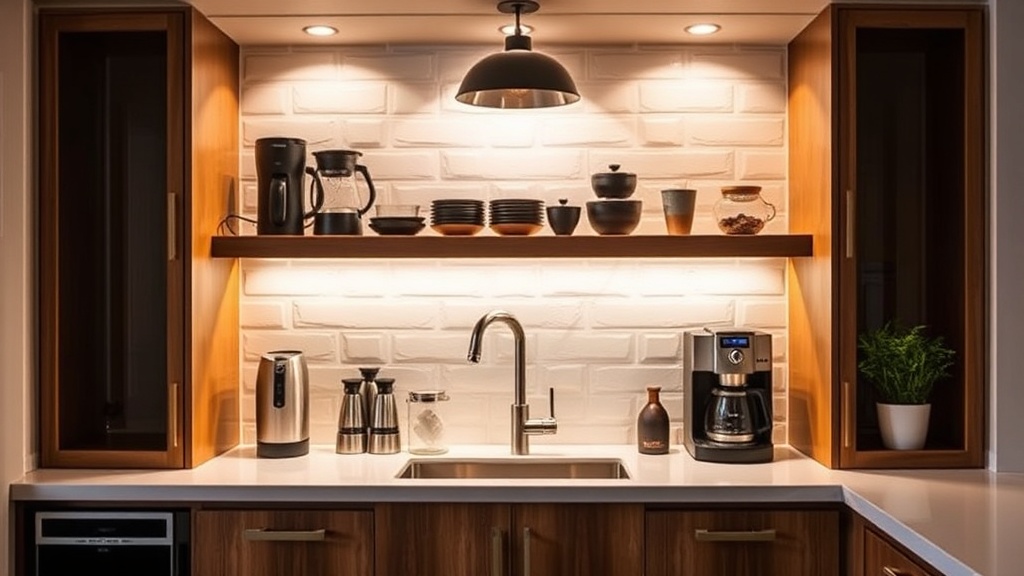
Create a High-End Coffee Station in Your Kitchen Corner

Research shows that the average coffee drinker spends thousands of dollars a year on cafe runs, often just for the convenience of a specialized brewing setup. A dedicated coffee station in your kitchen transforms a cluttered countertop into a functional, high-end beverage center. This guide walks through the specific steps to select a surface, organize your brewing tools, and style a corner that looks like it belongs in a boutique hotel without the boutique price tag.
What Is the Best Surface for a Coffee Station?
The best surface for a coffee station is a sturdy, flat area that can support the weight of your machine and any water reservoirs. You don't need a custom-built cabinet; a simple sideboard, a small kitchen island, or even a dedicated section of your countertop works perfectly. If you're working with a small apartment, a narrow console table can serve as a great anchor.
I always look for pieces with a bit of height. If your coffee maker is a standard size, a slightly taller table prevents the setup from looking "sunken" into your kitchen layout. I once found a mid-century modern teak side table at a thrift store for $25—it became the perfect base for my espresso setup. It adds character that a standard kitchen counter just can't provide.
When choosing a surface, consider these three factors:
- Weight Capacity: Coffee machines, especially espresso machines like the Breville Barista Express, are heavy. Ensure your table or shelf can handle the weight plus the vibration of grinding beans.
- Heat Resistance: You'll be dealing with steam and hot water. A stone or treated wood surface is safer than unprotected particle board.
- Depth: Make sure there is enough room behind the machine for cords and enough room in front for your mugs.
If you're tight on space, don't overlook the vertical option. A small rolling cart—the kind you see at Target or IKEA—is a lifesaver. It gives you a mobile station that can move out of the way when you're prepping dinner.
How Much Does a Coffee Station Cost to Build?
A high-end looking coffee station can cost anywhere from $50 to $500 depending on whether you use thrifted items or brand-new-in-box decor. You can achieve a luxury look by spending more on the "anchor" piece (the table or machine) and less on the decorative accents. The secret is in the styling, not the price tag of the jars holding your spoons.
Here is a breakdown of how I budget for these projects:
| Item Category | Thrifted/Budget Approach | High-End/New Approach |
|---|---|---|
| Base Surface | $15 - $40 (Thrifted Side Table) | $150 - $300 (New Sideboard) |
| Storage Jars | $5 - $10 (Glassware from Goodwill) | $30 - $50 (Brand Name Glassware) |
| Decor/Accents | $0 - $15 (Repurposed items) | $40+ (Designer trays/vases) |
| Total Estimated Cost | $20 - $65 | $220 - $400+ |
The goal isn't to spend a fortune. It's to spend smartly. A tray from a local thrift shop can hold your syrups and sugar bowls, making the whole area look intentional rather than messy. It's a simple trick, but it's one of my favorite budget decor hacks for a reason.
How Do I Organize My Coffee Supplies?
Organization relies on grouping similar items together and using vertical space to keep the countertop clear. You want to group your "functional" items (the machine and water) separately from your "aesthetic" items (the syrups and mugs). This prevents the station from looking like a junk drawer.
Start by categorizing your supplies. You'll likely have three main groups: brewing essentials (beans, coffee, filters), sweeteners (sugar, syrups, honey), and service items (mugs, spoons, stirrers). Use clear containers for the dry goods. It’s a small detail, but seeing the texture of the coffee beans or the colorful sugar crystals adds a visual element that feels very high-end.
The "Rule of Three" for Styling:
- The Anchor: This is your coffee machine. It’s the largest item and should be the focal point.
- The Height: Add something tall, like a slim vase with a single branch or a tall stack of coffee table books. This draws the eye upward.
- The Texture: Add something organic, like a small wooden bowl for sugar packets or a linen napkin tucked into a basket.
If you have a lot of syrups, don't just line them up. Use a tiered stand or a small tray. This keeps them from looking scattered. If you're using a lot of different liquids, check the food safety standards for your containers to ensure your syrups stay fresh and clean.
Don't forget the lighting. If your coffee corner is in a dark corner of the kitchen, a small battery-operated lamp or a sleek LED strip under a shelf can make the area feel cozy and inviting. It changes the entire mood of your morning routine.
Where Should I Place My Coffee Station?
The ideal placement for a coffee station is near a power outlet and a water source, ideally in a low-traffic corner of the kitchen. You want it to be easily accessible, but not in the middle of your main cooking "work triangle." If you put it right next to the stove, you'll constantly be bumping into it while trying to make dinner.
I've seen people put coffee stations in the dining room or even a small nook in the living room. This is a great way to create a "beverage zone" that is separate from the heavy-duty kitchen prep area. It makes the coffee-making process feel like a ritual rather than a chore. It's much more relaxing to grab a latte when you aren't dodging a frying pan.
A few things to watch out for:
- Avoid Heat Traps: Don't place your station directly against a wall if your machine produces significant steam. It can lead to moisture buildup and even mold on the paint over time.
- Cord Management: A messy cord can ruin the "expensive" look. Use a cord clip or a decorative box to hide the wire leading to the outlet.
- Countertop Clearance: Ensure there is enough room above the station for you to lift the lid of your machine or pour milk without hitting an upper cabinet.
If you find yourself struggling with a cluttered kitchen, remember that a dedicated station can actually free up space elsewhere. By moving the coffee maker off the main prep counter and onto a side table, you gain back valuable workspace for actual cooking. It's a win-win for your kitchen's flow.
When you're styling the area, think about the "layers." A tray provides a base layer. The coffee machine is the middle layer. A small plant or a stack of books provides the top layer. This layering technique is what makes a space look professionally designed rather than just "set up."
If you're looking for more ways to organize your living spaces, check out my guide on curating a console table setup. The principles of tray organization and height variation are almost identical to what you'll use for a coffee station.
One final tip: don't be afraid of a little "clutter" that looks intentional. A single beautiful ceramic mug sitting on a linen napkin looks much more inviting than a perfectly empty, sterile surface. A little bit of life makes a house feel like a home.