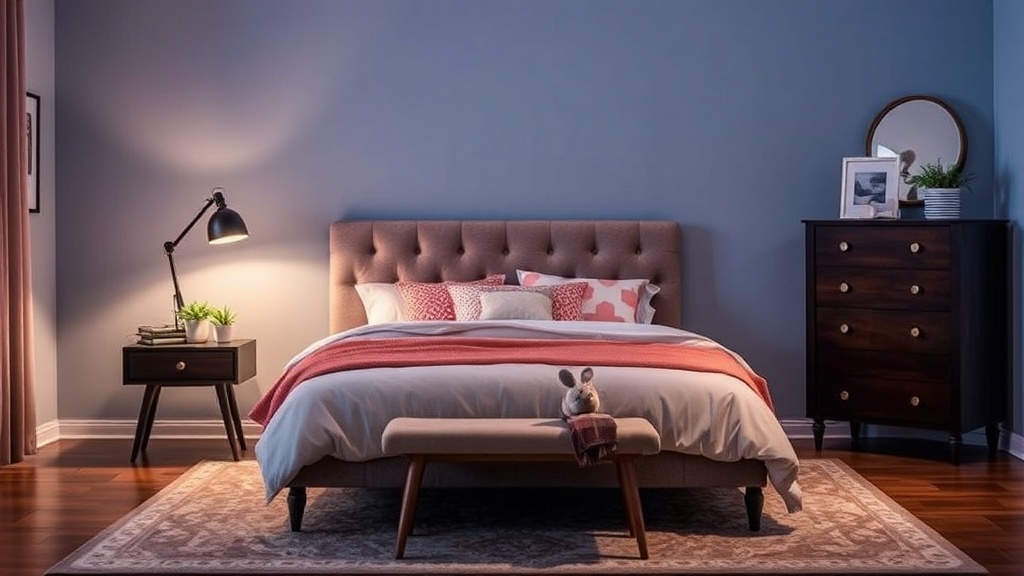
9 Ways to Refresh Your Bedroom Without Buying New Furniture

Swap Your Pillowcase Colors
Rearrange Your Bed Placement
Layer Textures with Existing Throws
Update Your Nightstand Essentials
Introduce Greenery via Plant Styling
Change Your Window Treatments
Rotate Your Wall Art Layout
Optimize Your Bedside Lighting
Declutter for a Calmer Aesthetic
Studies show that the average person spends about one-third of their life in their bedroom, yet many people feel stuck in a stale space because they think a "refresh" requires a massive furniture investment. This list explores nine high-impact, low-cost methods to change the look and feel of your sleeping sanctuary using things you likely already own or can find for a few dollars. We'll look at textile swaps, lighting adjustments, and layout shifts that prioritize style over spending.
How Can I Change the Look of My Bedroom for Under $50?
You can completely change your bedroom's aesthetic for under $50 by focusing on small, high-impact textile swaps and paint touch-ups. Instead of buying a new headboard or a new dresser, look at the textures and colors currently in the room. A single new pillowcase or a differently textured throw blanket can shift a room from "dated" to "modern" instantly.
The secret is to look at the "visual weight" of your items. If your room feels heavy or dark, you don't need a new bed frame—you need lighter fabrics. A linen-blend duvet cover from a place like Target or even a thrifted cotton sheet set can breathe life into a room without the heavy price tag of furniture.
Consider these three low-cost categories:
- Textiles: Throw pillows, duvet covers, and curtains.
- Wall Decor: Art prints, mirrors, and even fabric scraps hung as tapestries.
- Small Decor: Candles, small trays, and ceramics.
1. The Power of a New Color Palette
Don't underestimate the power of a single gallon of paint. If you aren't ready to paint the whole room, try a "feature wall" or even just painting an old wooden headboard. A deep forest green or a soft terracotta can make a room feel brand new. It's much cheaper than a new piece of furniture, and the results are much more dramatic.
2. Swap Your Hardware
This is my favorite "secret weapon" for dated furniture. If you have a basic IKEA Malm dresser that looks a bit plain, swap out the standard knobs for something with personality. You can find brass, ceramic, or even leather pull handles at hardware stores or even on Etsy. It’s a tiny change that makes a huge difference in how the piece looks.
How Do I Make My Bedroom Look More Expensive on a Budget?
Making a bedroom look expensive involves layering textures and perfecting your lighting rather than buying luxury brands. It’s about the way light hits a surface and how different fabrics interact. A room with a single light source often feels flat and cheap—layered lighting is the key.
I often tell my readers to look at budget decor tricks that make your home look expensive because the principles are identical. It’s about the details. A well-placed lamp or a textured rug can do more for a room's perceived value than a designer nameplate.
3. Layer Your Lighting
If you’re still using the big overhead light (the "big light," as we call it), stop! It flattens the room and makes everything look harsh. Instead, aim for three levels of light: overhead (for cleaning), task (for reading), and ambient (for mood). A small, inexpensive lamp with a warm bulb can transform a corner from a dark void into a cozy nook.
If you want to dive deeper into this, check out my guide on small changes to your lighting setup. It's a total game-changer for ambiance.
4. Use Mirrors to Add Depth
Mirrors aren't just for checking your outfit. A large floor mirror leaning against a wall or a small round mirror above a dresser can bounce light around a cramped room. This makes the space feel larger and more airy. You can often find incredible, heavy-framed mirrors at thrift stores for a fraction of the retail price—just look for the ones with character.
5. Introduce Natural Elements
Plants add life in a way that furniture simply can't. A tall Monstera or even a few small succulents on a nightstand brings organic shapes and vibrant colors into the room. If you don't have a green thumb, high-quality faux plants from places like IKEA can provide that same organic feel without the maintenance.
What Are the Best Ways to Rearrange Furniture for a New Feel?
Rearranging your furniture is the fastest way to change a room's energy without spending a single cent. Changing the focal point of the room—moving the bed from one wall to another, for example—can make the space feel entirely new. It forces you to look at the room from a different perspective.
Before you start moving heavy things, I recommend sketching your room on paper. It helps you visualize the flow. You want to make sure you aren't creating "traffic jams" in your walking paths.
| Current Problem | The Rearrangement Fix | Expected Result |
|---|---|---|
| Room feels cramped | Move bed away from the window | More open floor space and better light flow |
| Room feels "empty" | Angle a chair in a corner | Creates a cozy reading nook |
| Too much "dead space" | Move the dresser to a larger wall | Balances the visual weight of the room |
6. Create a Dedicated Nook
If you have a corner that feels useless, turn it into a destination. An armchair, a small side table, and a floor lamp can turn a "dead corner" into a reading nook. This adds a sense of purpose to the room. It’s not just a place to sleep; it’s a place to *be*.
7. The "Rule of Three" for Surfaces
Your nightstands or dresser might look cluttered or boring. Try the "Rule of Three." Group items in odd numbers—usually three—of varying heights. A candle, a small stack of books, and a small vase. This creates a visual "triangle" that is much more pleasing to the eye than a random pile of stuff. It looks intentional rather than messy.
8. Refresh Your Window Treatments
Curtains are basically the "outfit" for your windows. If you have basic blinds, adding a rod and some long, flowing curtains can soften the hard lines of the window frame. High-hanging curtains (hang the rod closer to the ceiling than the top of the window) will actually make your ceilings feel much taller. It’s a classic designer trick.
9. Declutter and "Edit" Your Space
Sometimes, the best way to refresh a room is to take things *out*. We tend to hold onto decor that no longer serves us. Look at your surfaces. If a piece of art or a trinket doesn't bring you joy or fit your current aesthetic, move it to another room or donate it. A curated space always looks more expensive than a cluttered one. A clean surface allows the pieces you *do* love to actually stand out.
The goal isn't to have a "perfect" room—it's to have a room that feels like you. Whether that's through a $5 thrifted vase or a complete furniture shuffle, the power to change your space is already in your hands (and your budget). Go out there and start creating!