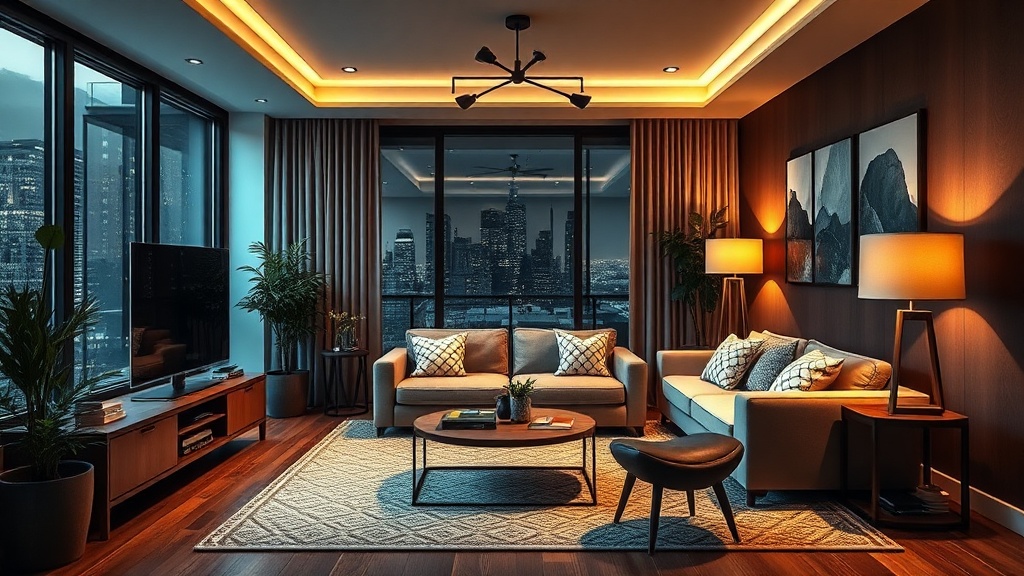
6 Ways to Make Your Small Living Room Feel Much Larger

Use Mirrors to Double Your Visual Space
Choose Furniture with Legs to Show More Floor
Stick to a Light and Neutral Color Palette
Hang Curtains Higher and Wider Than the Window
Incorporate Multi-Functional Pieces
Keep Surfaces Clear of Clutter
You will learn six specific, actionable design strategies to increase the perceived square footage of your small living room. These methods focus on manipulating light, furniture scale, and visual weight to create an open, airy atmosphere without requiring a full renovation or a massive budget.
1. Use Leggy Furniture to Reveal Floor Space
One of the most common mistakes in small living rooms is choosing furniture that sits flush against the floor. When a sofa or a heavy armchair has a solid base or a skirted bottom, it acts as a visual block, stopping the eye and making the floor area look truncated. To create the illusion of more space, opt for furniture with exposed legs.
Look for mid-century modern styles or Scandinavian-inspired pieces that feature tapered wooden or metal legs. When you can see the floor extending underneath a piece of furniture, your brain registers that the room continues further than it actually does. This "visual lightness" is essential for preventing a room from feeling cramped.
- The Sofa Test: Instead of a bulky, skirted traditional sofa, try a streamlined model with walnut or oak legs.
- Coffee Table Choice: Swap a heavy, solid wood block coffee table for a glass-topped table or a tripod-style table with thin metal legs.
- Side Tables: Use nesting tables with slim profiles rather than heavy end tables that occupy a large footprint.
If you already own heavy furniture, you can often find ways to lighten the look. For example, if you have a heavy wooden coffee table, try replacing the base or pairing it with lighter, more delicate accent chairs to balance the visual weight.
2. Maximize Natural Light and Reflective Surfaces
Light is your most effective tool for expanding a room. Dark corners absorb light and make walls feel like they are closing in, while bright, reflective surfaces bounce light around to push the walls outward. To maximize your living room's potential, you need to focus on both the windows and the surfaces within the room.
Start with your window treatments. Avoid heavy, velvet, or dark-colored drapes that block the sun. Instead, use sheer linen curtains or light-filtering cotton. Hang your curtain rods higher and wider than the actual window frame—ideally several inches above the top of the window and extending past the sides. This trick makes the window appear larger and allows more light to enter the room.
Next, incorporate mirrors strategically. A large floor mirror leaning against a wall or a series of smaller mirrors placed opposite a window can effectively "double" the light and the view. If you have a small nook, a mirror can create a sense of depth that isn't actually there.
Don't overlook the power of metallic accents and glass. A brass lamp, a silver tray on a side table, or even a collection of clear glass vases can catch and redirect light. For a more budget-friendly approach, you can even upcycle old glass jars into elegant textured vases to add reflective texture to your surfaces without buying expensive crystal.
3. Opt for a Monochromatic or Low-Contrast Color Palette
High-contrast color schemes—such as a dark navy wall against a bright white ceiling—create sharp lines that draw the eye to the boundaries of the room. In a small space, these sharp lines act as visual "stops," emphasizing exactly how small the room is. To make the walls feel like they are receding, use a monochromatic or low-contrast palette.
The goal is to blend the walls, trim, and even large furniture pieces into a single, cohesive color story. When the transition between the wall and the furniture is soft, the eye moves smoothly through the space rather than getting stuck on hard edges. This creates a sense of continuity and expansiveness.
- Tone-on-Tone: If you love color, use different shades of the same hue. A light sage green wall paired with olive green cushions and a seafoam accent chair keeps the room feeling layered but unified.
- The "Paint the Ceiling" Trick: Painting your ceiling the same color as your walls (or one shade lighter) eliminates the harsh line where the wall meets the ceiling, making the room feel taller.
- Neutral Foundations: Use soft whites, warm beiges, or light greys for your large-scale items like sofas and rugs.
If you want to add color without shrinking the room, use your accessories. A bright throw blanket or a colorful piece of art provides a pop of interest without the permanent visual weight of a dark-colored wall.
4. Use Large-Scale Decor Rather Than Clutter
It is a common misconception that small rooms require small decor. In reality, filling a small living room with dozens of tiny trinkets, small picture frames, and miniature sculptures creates "visual noise." This clutter makes the space feel busy and disorganized, which physically and mentally shrinks the room.
Instead, embrace the "less is more" philosophy by choosing fewer, larger-scale items. One oversized, high-quality piece of art is much more effective than a dozen small, scattered frames. A single large statement lamp provides a focal point and a sense of grandeur, whereas several small lamps can make a surface look cluttered.
When decorating your shelves or coffee table, follow the rule of grouping. Rather than scattering five small items across a surface, group three items of varying heights together. This creates a single, intentional visual moment rather than several small distractions. This approach is also a great way to elevate your entryway or living room walls by creating a singular, impactful gallery rather than a cluttered mess.
5. Draw the Eye Upward
When you run out of floor space, use your vertical space. By drawing the eye upward, you shift the focus from the limited square footage to the height of the room, which is often much more abundant. This creates a psychological sense of openness.
There are several ways to achieve this verticality:
- Floor-to-Ceiling Shelving: Tall, narrow bookshelves draw the eye up and provide ample storage without taking up much floor area.
- High-Hung Art: Hang your artwork slightly higher than the standard eye level to encourage people to look up.
- Vertical Patterns: If you use wallpaper or even certain types of rugs, look for patterns that have a vertical orientation.
- Tall Greenery: A tall, slender plant like a Fiddle Leaf Fig or a Dracaena can add life to a corner while emphasizing the height of the ceiling.
Even your lighting can play a role here. Using a pendant light or a tall floor lamp instead of a low-profile table lamp will naturally direct the gaze toward the upper half of the room, making the ceiling feel higher than it is.
6. Keep Pathways Clear and Unobstructed
A room feels small when you feel like you have to "navigate" around objects. If your furniture layout forces people to weave through a tight path to get to the sofa, the room will feel congested. To maximize the flow, ensure there is a clear, unobstructed path through the living area.
This often means being ruthless about furniture placement. Avoid placing large pieces in the middle of a walkway. If you have a small living room that also serves as a thoroughfare to a kitchen or dining area, use a low-profile rug to define the living space, but ensure the edges of the rug don't create a tripping hazard or a visual barrier.
Another way to keep paths clear is to utilize multifunctional furniture. An ottoman can serve as a coffee table, extra seating, or a footrest, and it can be easily moved if you need more space for a gathering. Similarly, using a wall-mounted floating shelf instead of a floor-standing bookcase keeps the floor clear and the walkway open.
Remember, the goal is to create "breathing room." Even in a tiny apartment, leaving a few inches of space between your furniture and the walls can actually make the room feel larger than if you pushed everything tightly against the perimeter. This small gap creates a sense of airiness and prevents the furniture from looking like it's "stuffed" into the room.