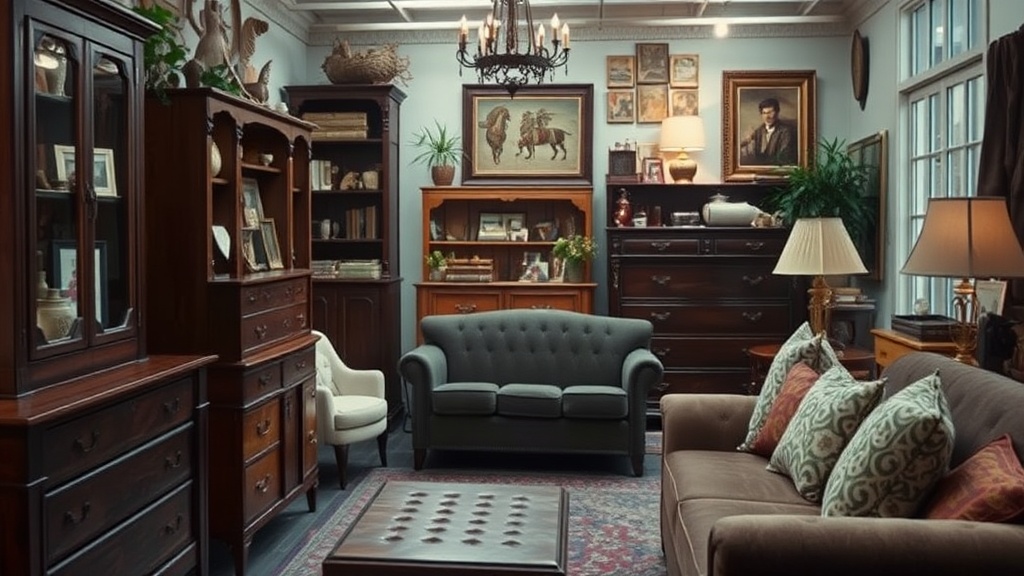
Where Do Thrift Stores Hide Their Best Furniture Finds?

The secondhand furniture market hit $16.5 billion in 2023—and it's not slowing down. What's driving this surge? A generation of homeowners discovered something their grandparents always knew: the best pieces rarely sit on the sales floor where everyone can see them. They're tucked away, waiting for shoppers who know where to look.
This isn't about luck or showing up at the right moment (though timing helps). It's about understanding how thrift stores actually operate—and using that knowledge to your advantage. After fifteen years of hunting down solid wood dressers for under $50 and mid-century gems hiding behind particleboard nightmares, I've mapped out exactly where the good stuff goes.
Why Do Stores Keep Furniture in the Back Room?
Walk into most thrift stores and you'll see the obvious: rows of mismatched chairs, scratched coffee tables, upholstery that hasn't been fashionable since 1987. What you won't see—unless you ask—is the back room.
Staff pull pieces off the floor for several reasons. Some need minor repairs: a loose leg, a missing drawer pull, a cushion that needs re-stuffing. Others are staged for special sales events—think 50% off weekends or holiday promotions. And some? They're simply waiting for space to open up on a floor that's already crowded.
The back room isn't a secret vault—it's inventory management. Stores receive donations faster than they can process and display them. A solid oak dining table might sit in storage for two weeks because the current floor arrangement can't accommodate it. Meanwhile, a particleboard desk with water damage gets prime placement because it's small and easy to move.
Here's the thing most shoppers miss: staff want to sell that back room inventory. It takes up space. It represents potential revenue they can't realize until someone sees it. Your job is to become the person they think of when they need to clear something out.
How Can You Get Access to Hidden Inventory?
Relationships drive access. Not social climbing—genuine, low-pressure connections with the people who handle merchandise every day.
Start with consistency. Visit the same stores regularly, ideally on the same days. Tuesday and Wednesday mornings are goldmines: they're after the weekend donation rush but before the weekend shopping crowd. Staff remember faces. They remember who asks thoughtful questions about construction and materials versus who complains about prices.
Ask directly—but politely—about back room furniture. "Do you have any dining tables that aren't on the floor yet?" or "I'm looking for a dresser with dovetail drawers—anything in storage you could show me?" Phrasing matters. You're not demanding special treatment; you're expressing specific interest that helps them match inventory to buyers.
Offer flexibility. If a piece needs minor work, say so: "I'd take that table if the price reflected the repair needed." Stores often discount back room items precisely because they require effort. Your willingness to handle sanding, staining, or hardware replacement turns their problem into your opportunity.
Some stores maintain email lists or social media accounts where they preview incoming pieces. Follow them. Comment thoughtfully. When you visit in person, reference those posts—"I saw that walnut dresser on your Instagram"—to reinforce that you're paying attention.
Timing Your Visits Strategically
Most donation centers see predictable patterns. January brings furniture after holiday hosting season. Late spring clears out college apartments. Estate sales peak in summer. Understanding these rhythms means hitting stores when inventory is fresh and competition hasn't arrived.
Morning visits beat afternoon rushes. Holiday weekends often trigger unannounced sales as managers try to clear space for new donations. Store anniversaries frequently include back room previews for regular customers.
What Should You Look for in Overlooked Pieces?
The back room philosophy extends beyond physical storage. Some of the best furniture sits right on the sales floor—just buried under bad paint, ugly hardware, or outdated upholstery.
Train your eyes to see past surface problems. A dresser with chipping laminate might hide solid wood underneath. A chair with stained velvet could have a frame worth reupholstering. Focus on structure: dovetail joints (not staples), solid wood (not particleboard), and frames that don't wobble when you push them.
Weight matters. Quality furniture is heavy. Lift corners of dressers and tables. If it feels surprisingly substantial, investigate further. Particleboard is light and hollow-sounding when you tap it. Solid wood has density and a particular resonance.
Check drawer construction. Pull out drawers completely. Look for dovetail joints at the corners—those interlocking triangular wedges that indicate hand or quality machine construction. Stapled or nailed corners suggest cheap manufacturing that won't survive another decade of use.
Upholstery is negotiable. Fabric can be replaced; frames cannot. A mid-century lounge chair with torn vinyl but solid wood frame is a project, not a problem. Factor reupholstery costs (typically $300-$800 depending on size and fabric) into your offer, but recognize that you're buying bones, not skin.
Quick Fixes That Transform Hidden Gems
Some transformations require nothing more than cleaning and patience. A paste of baking soda and water lifts decades of grime from wood surfaces. Minwax makes excellent wood cleaners that restore luster without stripping finish.
Hardware swaps deliver dramatic impact for minimal cost. A $25 investment in new drawer pulls transforms a dated dresser into something current. Sites like House of Antique Hardware carry reproduction pieces that match vintage styles without vintage prices.
Paint isn't always the answer—but when it is, technique matters. Chalk paint gets trendy coverage, but oil-based primers create durable foundations that actually last. Sand between coats. Use quality brushes. The difference between amateur and professional results often comes down to patience, not skill.
How Do Estate Sales and Auctions Compare?
Thrift stores aren't the only venue for hidden furniture finds. Estate sales operate on similar principles but with different dynamics—and often better quality.
Estate sale companies price aggressively on day one, then discount progressively: 25% off day two, 50% off day three. The best pieces (vintage furniture, quality construction) sometimes last until those final hours because early shoppers focus on small items they can carry easily.
Arrive late, not early. The crowds thin out. Prices drop. And companies need to clear houses completely—empty rooms mean completed contracts and payment. Your offer on a dining set that hasn't moved in three days carries weight it wouldn't have on opening morning.
Auctions require different strategies. Preview days let you inspect pieces thoroughly—test drawers, check for repairs, measure dimensions. Set maximum bids before the adrenaline kicks in. Factor buyer's premiums (typically 10-20%) into your calculations. And remember: transportation is your responsibility. That $40 armoire isn't such a deal if you need to rent a truck for $150.
Building Your Network of Sources
The most successful furniture hunters diversify. Thrift stores provide volume. Estate sales offer quality. Online marketplaces—Facebook Marketplace, Craigslist, OfferUp—connect you with individual sellers motivated by moving deadlines rather than profit margins.
Each channel requires different approaches. Thrift stores reward relationship-building. Estate sales reward strategic timing. Individual sellers respond to cash offers and flexible pickup schedules. Master one channel, then expand.
Document your finds. Photograph before and after transformations. Share them (with permission) with store staff who helped you find pieces. This reinforces your status as a serious buyer—and gives them visual proof that back room inventory deserves attention.
The furniture you want exists. It's sitting in a donation center's storage room right now, or buried under bad paint on a sales floor, or priced for quick sale at an estate liquidator's final day. Your job isn't finding it—that part's easy once you know where to look. Your job is recognizing what others miss, and having the vision to transform overlooked potential into the foundation of a beautiful home.
Start with one store. One conversation. One Tuesday morning visit. The pieces are waiting—you just need to know which doors to open.