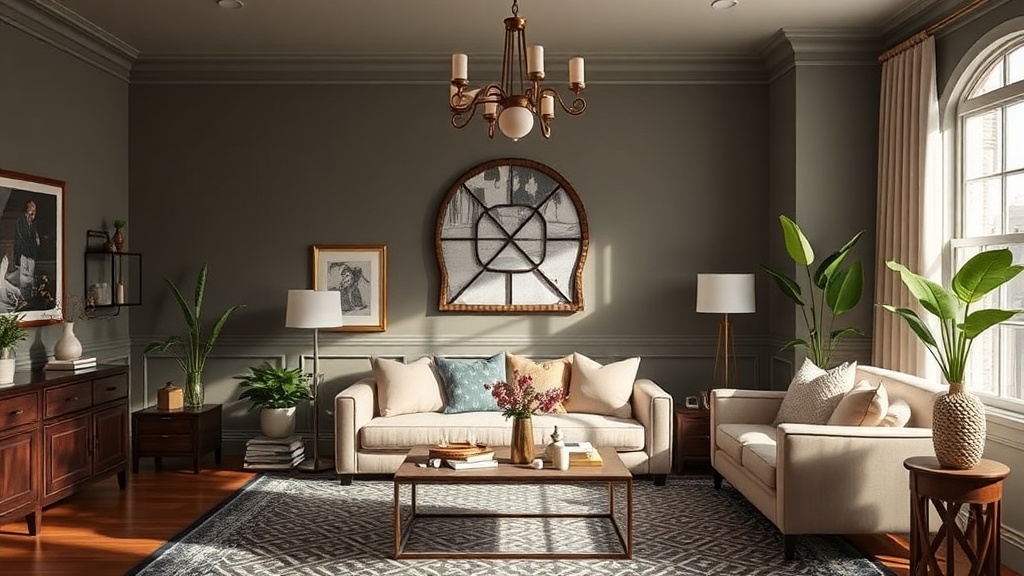
Transform Your Space: 25 Budget-Friendly Decor Ideas That Look Expensive

You don't need a trust fund to make a home look like a million bucks. This guide walks through 25 proven, wallet-friendly decorating strategies that deliver high-end results without the sticker shock. From thrift store transformations to clever paint tricks, these ideas help any space feel curated, cohesive, and expensive—minus the designer price tags.
Why does paint make the biggest difference in budget decorating?
Paint is the single most cost-effective way to transform a room. One gallon (around $35 at Sherwin-Williams or Benjamin Moore) can completely shift the mood of a space. The trick isn't just color—it's finish and technique.
Here's what works: matte finishes hide wall imperfections beautifully, making older homes look polished. Satin or eggshell adds subtle sheen that's easy to wipe clean. But the real secret? Painting trim, doors, and even ceilings the same color as the walls. This creates an enveloping, expensive look—think Belgian minimalist showhouses.
Don't stop at walls. Paint kitchen cabinets (Benjamin Moore Advance holds up beautifully), bathroom vanities, or that tired IKEA Billy bookcase. A $20 can of chalk paint turns a $15 thrift store dresser into a Restoration Hardware dupe. Two coats. Sand lightly. Wax. Done.
Where should you shop for decor that looks expensive but isn't?
The best sources aren't big-box stores. Thrift stores, Facebook Marketplace, estate sales, and architectural salvage yards yield pieces with character at fractions of retail cost.
| Source | Best Finds | Typical Price Range |
|---|---|---|
| Facebook Marketplace | Solid wood furniture, vintage rugs, mirrors | $10 - $200 |
| Habitat for Humanity ReStores | Tile, light fixtures, cabinets, hardware | $2 - $150 |
| EstateSales.net | Art, brass objects, quality linens | $5 - $500 |
| IKEA As-Is Section | Discontinued items, floor models, returns | 30-50% off retail |
| Target Studio McGee (sale) | Ceramics, frames, baskets | $5 - $40 |
Timing matters. Estate sales on Sundays often drop prices 50%. Thrift stores restock early weekdays—shop Tuesday mornings. The Hunt & Gather approach (patience + persistence) beats impulse buying every time.
That $8 brass lamp from Goodwill? It just needs new wiring (about $12 at Home Depot) and a linen shade from Target. Suddenly it's a $300 look-alike.
How do you arrange furniture to make a room look designer-done?
Placement beats price every single time. A $2,000 sofa pushed against walls looks cheaper than a $400 one floated in the right spot.
Start with the "conversation area" rule. Pull seating away from walls—yes, even in small rooms—and arrange pieces to face each other. Leave 18 inches between coffee tables and sofas (enough to walk, close enough to set down wine). Float a sofa with a console behind it for instant sophistication.
Rug sizing trips up most people. Too small = everything looks dwarfed. The fix? Front legs of all major furniture pieces should touch the rug. In living rooms, aim for at least 8x10 feet (check Rugs USA or Ruggable for affordable options). Under dining tables, extend the rug 24 inches beyond chair legs so they don't catch when pulled out.
Symmetry signals intention. Flank a fireplace or bed with matching nightstands and lamps. Not identical—coordinated. Two different brass lamps of similar scale work perfectly. Balance creates calm. Calm reads as expensive.
The 60-30-10 Color Formula
High-end rooms follow this ratio instinctively. Sixty percent dominant color (walls, large furniture). Thirty percent secondary (upholstery, rugs). Ten percent accent (pillows, art, objects). This prevents visual chaos—that cluttered feeling that cheapens any space.
Start neutral. Cream walls. Linen sofa. Then layer. Navy velvet pillows. A rust ceramic vase. Brass candlesticks. The restraint reads as confidence. (And neutrals don't clash with future thrift scores.)
What cheap upgrades make kitchens and bathrooms look luxe?
Hardware is jewelry for rooms. Those $2 builder-grade cabinet pulls? Swap them. Amazon Basics, Amazon Basics (yes, really), and Wayfair carry solid brass and matte black options starting at $3 each. For about $40 total, dated oak cabinets become transitional chic.
In bathrooms, focus on textiles. White towels—thick, hotel-weight ones from Costco or Target's Threshold line—signal spa-level luxury. Roll them in baskets. Drape one over a ladder. Display nice soap (Aesop if you're splurging, Method if you're not) in a ceramic dish. Details matter.
Peel-and-stick tile has evolved. Brands like Smart Tiles and TrafficMaster make backsplashes and even floor updates possible for under $100. The key is careful cutting and patient placement—rushed installation looks exactly like what it is.
Lighting changes everything. That flush-mount boob light in the hallway? Replace it with a $60 semi-flush mount from Wayfair or a vintage find rewired from Etsy. Sconces flanking a bathroom mirror beat over-mirror bars hands down. (Hire an electrician for hardwired jobs—safety first.)
DIY Art That Doesn't Look DIY
Empty walls scream "not finished." But original art costs fortunes. The workaround? Create your own gallery moments.
- Frame vintage scarves or fabric remnants (thrift stores have bins of these)
- Print free high-res art from museums—the Met, the Getty, the Art Institute of Chicago offer downloadable masterpieces
- Frame kids' artwork in thin black frames with generous mats—suddenly it's intentional, not clutter
- Clip magazine pages (Architectural Digest, World of Interiors) to clipboards for an evolving display
- Paint simple abstracts on canvas panels—three colors max, loose brushstrokes
Frames matter more than what's inside. Consistent framing unifies random images into a collection. IKEA Ribba frames. Amazon's Gallery Perfect kits. Even Dollar Store frames painted one color. The cohesion fools the eye.
Plants: The Living Accessory
Nothing breathes life into a space like greenery. A $12 pothos from Home Depot trailing from a thrifted brass planter looks editorial. A $25 fiddle leaf fig (yes, they're finicky, but try!) in a woven basket adds height to corners.
Can't keep plants alive? Dried pampas grass, eucalyptus, and pussy willow branches work year-round. Trader Joe's sells eucalyptus bundles for $3.99. Pottery Barn charges $49 for the same look dried. The math is easy.
How do you make a small space feel expensive and spacious?
Small doesn't mean cheap—if you're strategic. Mirrors double visual space instantly. A large leaning mirror (IKEA Hovet, $129) creates the illusion of depth and bounces light around dim rooms. Hang mirrors across from windows when possible.
Scale appropriately. One large piece of art beats a wall of tiny frames. A single oversized planter commands more attention than three small ones. Small rooms drown in too many little things. Edit ruthlessly.
Choose furniture with legs. Sofas, chairs, and consoles raised on visible legs (Mid-Century styles, Campaign furniture) let light flow underneath. The room breathes. Compare that to skirted, ground-hugging pieces that visually weigh down a space.
Glass and Lucite disappear. Acrylic console tables. Glass coffee tables. They don't block sight lines. Pair them with substantial pieces—a chunky knit throw, a sculptural lamp—to avoid the "dentist office" feel.
The Power of Negative Space
Expensive rooms have room to breathe. Countertops with one beautiful bowl, not fifteen appliances. Bookshelves with books and two objects per shelf, not crammed curio cabinets. The confidence to leave space empty—that's the designer mindset.
Start by removing half the decorative objects in a room. Live with it for a week. Remove half again. What's left should be meaningful, beautiful, or both. Everything else is visual noise.
Budget decorating isn't about buying cheap stuff. It's about buying (or finding) the right stuff and placing it intentionally. A $5 thrift vase with grocery store flowers on a freshly painted table in a well-lit room? That's the goal. That's the look.