The Women Who Taught Me That Resourcefulness IS Design

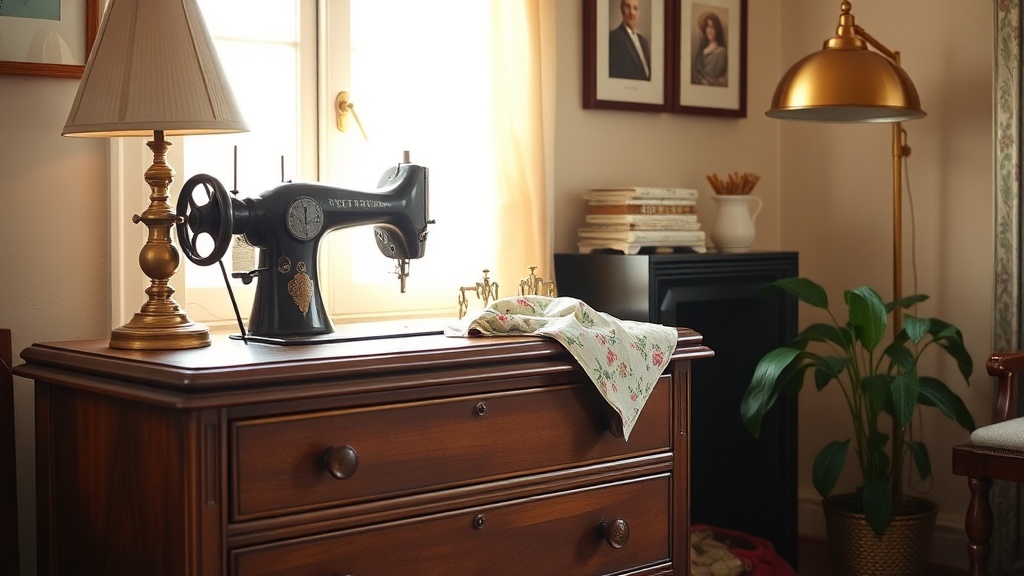
My mom used to sew curtains from fabric remnants she picked up at the end-of-bolt sales at Jo-Ann. Not as a hobby. As a strategy. She'd walk out with two yards of something nobody else wanted—a discontinued floral, a stripe that was slightly off—and two days later we had window treatments that looked like they belonged there. That was just... how things worked in our house.
I didn't realize until I was in my twenties that I was watching design happen in real time.
With IWD coming up on Sunday, I've been thinking about all the women who quietly built the way I see interiors—who showed me, long before I ever typed the words "budget decor" into a URL, that the most interesting design choices come from constraints, not credit cards.
My mom is the obvious starting point. She treated scarcity like a design brief. Every remnant, every hand-me-down, every piece my dad dragged home (including, yes, a pallet that became our living room bookshelf before pallet shelves were a Pinterest board) became something intentional. She had an opinion about everything—what color goes next to what, how light falls differently in the morning versus late afternoon. She just never called it "interior design." She called it making the apartment feel like ours.
The women at Goodwill have been some of my best teachers in Nashville. I'm specifically thinking of a woman who worked the furniture section at the Goodwill on Charlotte Avenue for about three years—I never caught her name—who once pulled me aside when I was eyeing a wobbly dresser and said, simply, "Check the dovetail joints. Everything else you can fix." That's it. Fifteen seconds. But I have applied that test probably three hundred times since then. Good bones are non-negotiable. Everything else is paint and hardware.
There are other women like her at thrift stores all over this city who can tell you, within ten seconds of looking at a piece, whether it's worth your trunk space. That knowledge is passed down, sideways, in offhand comments at the register. It's not in any design curriculum.
Online, the picture gets more complicated—there's a lot of noise—but I genuinely grew up creatively watching women who normalized making beautiful things from not-very-much. The DIY creators who showed that a $6 can of spray paint could completely transform a lamp base. The thrift flippers who documented the whole process, including the failures. The renters who figured out how to have real, considered spaces without a single nail hole. Their work quietly shifted my belief about what "good design" was allowed to look like.
Here's the thing I keep coming back to: so much of the household resourcefulness I've witnessed—in my own family, in thrift stores, in online communities—has come from women making decisions about what stays and what goes, stretching resources, improvising under constraints. That's not a limitation. That's design thinking. The ability to look at a $12 dresser and see what it could be—that's a skill. The willingness to sand and paint and try something that might not work—that's creative courage.
I got my interior design degree at SCAD. I learned drafting and color theory and the history of furniture movements. It was genuinely useful. But the design education that actually shaped how I work? It came from my mom's needle and thread, a stranger's comment about dovetail joints, and a lot of women online who showed their mistakes alongside their wins.
If you've been reading this blog for any amount of time, I'd genuinely love to know: Who taught you that beautiful design didn't have to cost a fortune? Was it a family member, a friend, someone you've never met in person? Drop it in the comments—I read every single one.
You've got this. Go drink some water.
— Tessa