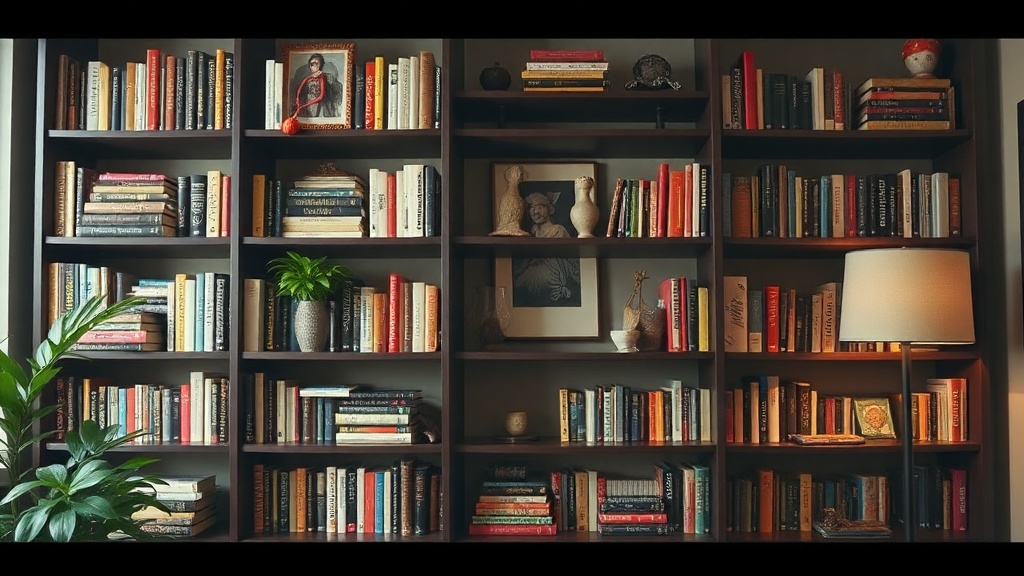
How to Style Your Bookshelves Like a Designer on a Budget

What This Post Covers (And Why Your Bookshelves Deserve Attention)
Styled bookshelves transform a room from cluttered to curated without a single paintbrush. This guide walks through the exact techniques interior designers use to create balanced, beautiful shelf displays—adapted for budgets under $50. You'll learn how to arrange objects for visual flow, where to find designer-looking pieces for thrift store prices, and the common mistakes that make shelves feel chaotic rather than collected. Whether you're working with built-ins, freestanding units, or a single IKEA Billy bookcase, these principles apply.
What Are the Basic Rules for Styling Bookshelves?
The core principle is simple: create visual rhythm through variation. Alternate between vertical and horizontal book stacks. Mix heavy objects with airy ones. Balance solid colors against patterned spines. Think of each shelf as its own composition—plus part of a larger whole.
Start with books as the foundation. (Not every book needs to stand upright.) Lay some flat to create pedestals for objects. Group by color for a cohesive look, or mix spine colors intentionally for energy. The team at Apartment Therapy recommends the "rule of thirds"—divide each shelf visually into three sections and vary what fills each.
Height Variation Creates Flow
Tall objects draw the eye upward. Short ones create breathing room. Place your tallest piece on the left third of a shelf, medium in the center, smaller on the right—or reverse it. This zigzag pattern, carried across multiple shelves, guides the gaze naturally.
Don't line up items like soldiers. Stagger objects front-to-back too. A small brass figurine peeks from behind a stacked book. A ceramic vase sits forward, demanding attention. Depth keeps shelves from reading as flat and boring.
The 60-30-10 Formula
Borrowed from color theory, this ratio works for shelf styling too. Sixty percent books, thirty percent decorative objects, ten percent negative space. That empty space? It's not wasted. It gives the eye rest and makes everything else feel intentional.
Here's the thing—this isn't a rigid formula. Some stunning shelves run 40% books, 60% collected objects. The point is awareness. Know what percentage you're working with and commit to it.
| Element | Budget Option | Typical Cost | Where to Find |
|---|---|---|---|
| Tall vases | Glass bottles, thrifted ceramic | $3-$8 | Goodwill, estate sales |
| Small frames | Vintage metal or wood frames | $2-$5 | Flea markets, Facebook Marketplace |
| Sculptural objects | Geode paperweights, brass animals | $4-$12 | HomeGoods, TJ Maxx |
| Baskets | Seagrass or wire baskets | $8-$15 | IKEA, Target Threshold |
| Bookends | Heavy vintage objects (irons, sculptures) | $5-$10 | Antique malls, thrift stores |
How Can You Style Bookshelves Without Spending a Fortune?
The secret isn't buying cheaper versions of expensive things—it's reimagining ordinary objects as shelf decor. A vintage camera from your attic. A stack of beautiful magazines tied with twine. A potted pothos trailing over the edge. These cost nothing and look better than mass-produced "shelf filler."
Thrift With Intention
Successful thrifting requires a mental checklist. Look for: interesting textures (brass, ceramic, weathered wood), varied heights (anything 8-12 inches tall anchors a shelf beautifully), and odd numbers (groups of three or five please the eye more than pairs).
The catch? Thrift stores overwhelm when you browse aimlessly. Walk in knowing you need three tall objects and two small frames. Leave when you've found them. This discipline prevents clutter purchases that don't serve your shelves.
Shop Your Home First
That ceramic bowl from your wedding registry—still in the cabinet? Display it. The vintage hardcovers hiding in storage? Pull them out. Bookshelves showcase what you already own and love. (There's something deeply satisfying about finally using the "good" dishes as decor rather than waiting for special occasions that never come.)
Worth noting: beautiful objects hide in unexpected places. Kitchen canisters become sculptural when emptied and placed on a shelf. Old rolling pins lean beautifully against book stacks. Even a collection of vintage soda bottles—cleaned and grouped—reads as intentional art.
The $25 Shelf Refresh Challenge
Set a hard limit. Twenty-five dollars forces creativity. Spend $10 at a thrift store for two statement objects. Another $10 at Dollar Tree for glass vases (fill them with dried grasses from your yard). The final $5 buys a can of Rust-Oleum spray paint to unify mismatched frames or objects.
That said, don't underestimate paint's power. A quick coat of matte black transforms cheap figurines into cohesive, expensive-looking pieces. White paint unifies book spines when wrapped covers feel too crafty. Gold spray paint improves the mundane—plastic becomes metal, cheap becomes curated.
Plants: The Budget Decorator's Secret Weapon
Nothing brings shelves to life like greenery. Trailing plants (pothos, philodendron, string of pearls) soften hard edges and fill awkward gaps. Small succulents in thrifted ceramic pots add texture without bulk.
Faux plants have improved dramatically. The Sill's artificial collection looks shockingly real, but budget options exist too. IKEA's FEJKA line offers convincing faux trailing plants for under $10. Real plants need light and water—faux ones need only occasional dusting.
What Are the Most Common Bookshelf Styling Mistakes?
Overcrowding tops the list. Crammed shelves feel heavy and anxious. They signal "storage" rather than "style." The fix? Remove one object from every shelf. Step back. The display breathes easier immediately.
Matching Sets Kill Personality
Those coordinating vases from Target? Pretty individually, deadly as a trio. Identical objects create visual monotony—the opposite of curated. Break up sets. Separate matching items across different rooms or mix them with unrelated pieces.
Designers source from everywhere—flea markets, estate sales, grandparents' attics. This mix of provenance creates the "collected over time" look that matching sets fake poorly. One vintage brass object beats three matching ceramic ones from a big-box store.
Ignoring the Back of the Shelf
Bare MDF or cheap laminate backing drags down any display. The solution costs under $15: removable wallpaper, contact paper, or even wrapping paper behind glass. A subtle pattern (grasscloth texture, soft stripe) adds depth without competing with your objects.
For built-ins, paint the backing a moody color—Benjamin Moore's Hale Navy or Forest Green make books and ceramics pop dramatically. This single change reads as expensive custom work rather than weekend DIY.
Forgetting Function
Beautiful shelves that don't hold books fail at their primary purpose. Style around your actual library. Keep frequently referenced books accessible. Use the highest shelves for display-only pieces, lower ones for daily reads.
Storage baskets on bottom shelves hide clutter—remote controls, charging cables, notebooks. The Container Store's Polyester Herringbone Bins fit standard shelf heights and look intentional rather than utilitarian.
Static Displays Grow Stale
The best styled shelves evolve. Swap objects seasonally. Move that ceramic pumpkin to the kitchen in summer. Rotate books so different spines face outward. This keeps your space feeling fresh without spending a dime.
Some designers photograph their shelf arrangements. (Not for Instagram—for reference.) When it's time to refresh, the photo shows exactly what moved where. No memory required.
Putting It All Together: A Real Example
Start with a standard 6-foot bookcase—three shelves, roughly 30 inches wide each. Remove everything. Vacuum thoroughly. If the backing looks tired, line it with grasscloth contact paper.
Top shelf: Three vertical stacks of books (grouped by color), flanked by a tall thrifted brass vase on the left and a trailing pothos on the right. One small ceramic object sits atop the center book stack.
Middle shelf: The focal point. A large horizontal book stack anchors the center, topped with a vintage magnifying glass and a small framed photo. A tall object (ceramic, wood, or metal) balances on the left third. Nothing on the right third—breathing room.
Bottom shelf: Function meets form. Woven baskets on the left two-thirds hide clutter. Books stacked horizontally and vertically fill the remaining space, with one sculptural object for interest.
Step back. Squint. Does the silhouette please you? Are heights varied? Is there enough empty space? Adjust until it feels right—there's no single correct answer, only what delights your eye when you walk into the room.
"The best rooms have something to say about the people who live in them." — David Hicks
Your bookshelves tell your story. The vintage cookbook from your grandmother. The thrifted brass deer that made you smile. The plant you haven't killed yet. Style them with care, and they'll reward you every time you enter the room.
Steps
- 1
Clear and clean your shelves completely before styling
- 2
Sort books by color or size and gather decorative objects
- 3
Apply the rule of thirds: place items in odd numbers and vary heights