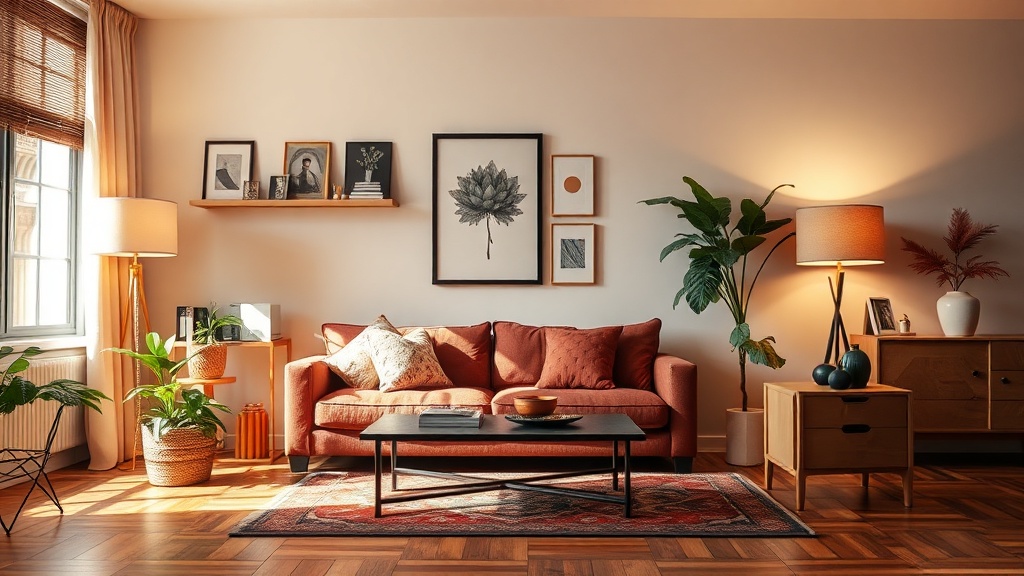
How to Furnish Your First Apartment on a $500 Budget

This post breaks down exactly how to turn a bare apartment into a livable, stylish space with just $500 in the bank. You'll learn where to shop, what to buy first, and how to stretch every dollar without settling for a space that looks like a dorm room. Whether the move happened last week or the lease starts tomorrow, these strategies come straight from a decorator who built an entire brand on scoring $3 Goodwill finds and transforming them into conversation pieces.
Where should you spend most of your $500 apartment budget?
The bed and the sofa should eat up about 60% of the total budget combined. Here's the thing: those two pieces dictate daily comfort in a way that a trendy lamp or an accent mirror never will. A terrible mattress means back pain; a broken-down futon means no one ever stays for movie night. That said, the remaining $200 has to cover everything else—storage, lighting, kitchen basics, and a few decorative touches—so the bed and sofa need to come from places that sell quality at rock-bottom prices.
For the mattress, IKEA's VESTERÖY hybrid mattress (around $180 for a full size) delivers decent support and a 10-year warranty. It's firm enough for most sleepers and arrives rolled up, which solves the "how do I get this up the stairs" problem common in walk-up buildings. If even $180 feels steep, Facebook Marketplace and Craigslist regularly list nearly-new mattresses from people who moved in with partners—just inspect for stains, bed bugs, and tags that confirm it's less than two years old.
The sofa is trickier. A bad couch sags within months. Facebook Marketplace and estate sales are goldmines here, especially in college towns where students dump solid furniture every May. Look for brands like Rowe, Ethan Allen, or La-Z-Boy in used listings—those frames last decades. Budget around $120. If the upholstery is ugly (it usually is), that's fixable. A $15 slipcover from Amazon or a thrifted king-size sheet can hide a multitude of sins.
What furniture should you buy first when moving into a new apartment?
After the bed and sofa, the priority list runs: storage, a surface for eating/working, lighting, and kitchen basics—in that exact order. Without storage, clutter takes over within 48 hours. Without a table, every meal happens on the floor. Without lamps, the space feels like a cave by 6 p.m.
Storage doesn't mean running to The Container Store. It means finding pieces that do double duty. A $20 bookshelf from Facebook Marketplace becomes a room divider in a studio. Plastic milk crates (often free behind grocery stores or $5 at hardware stores) stack into modular storage. The catch? They have to look intentional. Spray paint them matte black or deep forest green, and suddenly they're "industrial chic" instead of "college dorm."
A dining or work surface can be cobbled together for under $30. An old solid-core door from a Habitat for Humanity ReStore (usually $10–$15) makes an excellent desk or dining table when propped on two sawhorses or IKEA LERBERG trestles ($10 each). The surface is massive, the look is minimal, and the total cost stays south of $35. Worth noting: ReStore locations vary wildly in inventory, so call ahead or plan to visit two or three times.
Lighting transforms mood faster than almost anything else. Overhead apartment lighting is usually harsh, yellow, and depressing. Thrift stores overflow with table lamps in the $5–$10 range. Buy three. Place one by the sofa, one by the bed, and one in the kitchen or entryway. Swap out any dated shades for $3 drum shades from IKEA or a clearance bin at The Home Depot. The room will feel warmer, bigger, and more expensive instantly.
How do you make cheap furniture look expensive?
The secret isn't buying better stuff—it's fixing the details that betray a low price point. Hardware, textiles, and finish quality are the three giveaways. Address those, and a $20 dresser can pass for $200.
Start with hardware. Big-box store dressers and secondhand pieces almost always wear cheap knobs. Replace them. Amazon sells packs of modern brass or matte black knobs for $1–$2 each. A dresser with twelve knobs costs about $15 to upgrade, and the visual impact is immediate. (Tessa—the decorator behind Budget Decor—once found a solid wood dresser for $8, spent $14 on brass pulls, and had readers guessing it came from West Elm.)
Textiles hide a lot. That $80 used sofa? Throw a $12 textured blanket over the back, add two $8 pillow covers from IKEA or H&M Home, and the eye registers "curated" instead of "hand-me-down." Linen-look and velvet pillow covers read expensive even when they're polyester. Avoid shiny satin or anything with a prominent brand logo printed on it.
Finish quality matters on wood pieces. A $15 thrifted coffee table with water rings and scratches can be revived in an afternoon. Sand lightly, apply a coat of Minwax wood stain in Dark Walnut or Jacobean, and seal with a $6 can of polyurethane. The result looks intentional and custom. For laminate pieces that can't be stained, a coat of Behr cabinet paint in a moody color like Black Mocha or English Channel improves the piece without trying to fake a wood grain.
What are the best places to find furniture under $50?
The best sources are Facebook Marketplace, estate sales, Habitat for Humanity ReStores, college dump zones at semester's end, and thrift chains like Goodwill and Salvation Army. Each has a different hit rate depending on the city and the season. Here's a breakdown of where to hunt for specific pieces:
| Source | Best For | Typical Price Range | Pro Tip |
|---|---|---|---|
| Facebook Marketplace | Sofas, beds, desks | $0–$100 | Search at the end of each month during moving season (May–August). |
| Habitat ReStore | Doors, lumber, lighting, cabinets | $5–$40 | Weekday mornings restock after weekend donations. |
| Goodwill / Salvation Army | Lamps, chairs, small tables, art | $3–$25 | Suburban locations often have better furniture than urban ones. |
| Estate Sales | Solid wood dressers, bookshelves, vintage decor | $10–$60 | Show up on Sunday afternoon when prices drop 50%. |
| College Dump Zones | Bookshelves, mini-fridges, rugs | Free–$20 | Check campus dumpsters and donation piles the week after finals. |
Curbside finds deserve a mention too. In neighborhoods with bulk trash pickup, the night before collection is prime time. People toss perfectly good bookcases, side tables, and chairs because they're too lazy to list them online. The only rule: inspect for structural damage (wobbly legs can be fixed; mold cannot) and always clean thoroughly before bringing anything inside.
What cheap upgrades make the biggest visual impact?
Paint, curtains, and rugs change the entire feeling of a room for less than $75 combined. They're the highest-ROI moves in a first apartment.
A gallon of paint costs $25–$35 and covers roughly 400 square feet. In a small studio or one-bedroom, that's enough for an accent wall or even the whole space if the ceilings are low. Light, warm neutrals—think Benjamin Moore's White Dove or Sherwin-Williams Alabaster—reflect light and make rooms feel larger. One bold accent wall in a color like Farrow & Ball's Hague Blue or a deep forest green adds personality without overwhelming the space.
Curtains should hang high and wide—never skimp on height. Mount the rod 6–12 inches above the window frame and extend it 6–10 inches past the sides. IKEA MAJGULL blackout panels ($25 per pair) look expensive because the fabric has weight and texture. For an even cheaper option, flat sheets from Target's Threshold line clipped onto curtain rings work surprisingly well.
A rug anchors the room. Without one, furniture looks like it's floating. The trick is buying the right size: in a living area, the front legs of the sofa and any chairs should sit on the rug. A 5x7 or 6x9 rug is usually sufficient for a small apartment. Check Rugs USA clearance sales, IKEA's LOHALS jute rug ($80, but often discounted), or Facebook Marketplace for secondhand wool rugs. If the rug is ugly but the size is right, layer a smaller, prettier flat-weave or vintage rug on top.
How do you avoid common first-apartment mistakes?
The biggest mistake is buying everything new from one store on move-in weekend. It feels efficient, but it results in a space that looks like a catalog page—and not in a good way. Matching sets flatten personality. More importantly, financing furniture on a store credit card destroys the $500 budget before a single throw pillow gets purchased.
Another trap? Buying décor before buying storage. A macramé wall hanging looks great on Instagram, but it won't hold the pile of mail, chargers, and miscellaneous cords that accumulate by the door. Solve the boring problems first. Once every item has a home, then it's time for art and plants.
Speaking of plants: they're the cheapest way to make a room feel alive. A $4 pothos from Trader Joe's or Lowe's thrives in low light and grows fast. Pop it into a $2 terracotta pot from any hardware store. One plant on a side table and one on a windowsill signals that someone actually lives here—that the space is cared for.
Finally, resist the urge to finish the apartment in one week. The best spaces evolve over months as better pieces appear at thrift stores or get handed down from friends. Live with the emptiness for a while. An almost-empty room with one great sofa, good light, and a single piece of art always looks more sophisticated than a cluttered room stuffed with rushed purchases.
"Beautiful rooms aren't built in a day. They're built one $3 find at a time."
The $500 first apartment isn't about deprivation. It's about being selective, patient, and willing to put in a little elbow grease. Start with the bed and sofa. Hunt in the right places. Fix the details that cheapen a piece. Add paint, textiles, and light. By the time the budget runs out, the space won't just be functional—it'll feel like home.