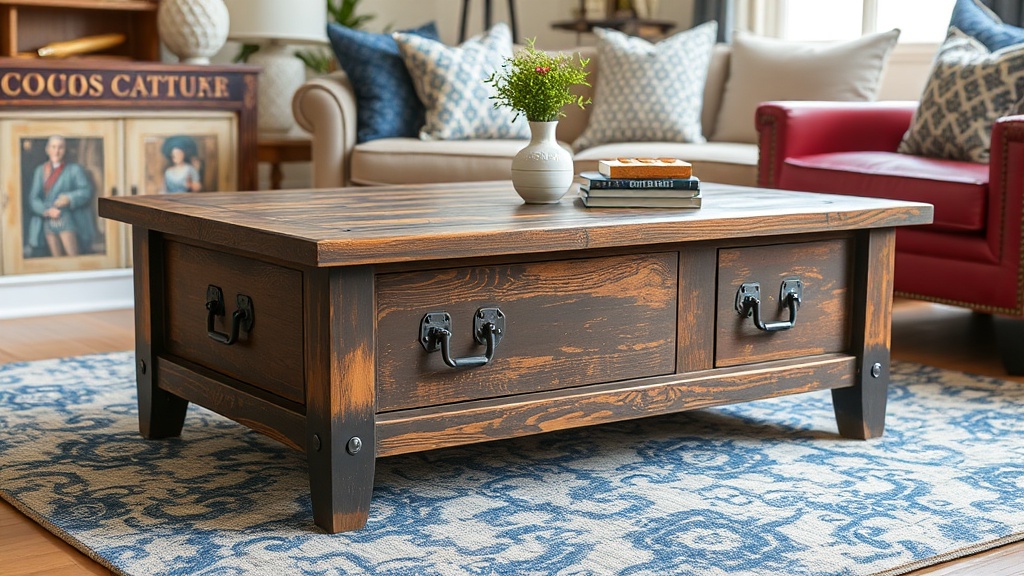
Giving Old Wooden Coffee Tables a Second Life with Paint and Hardware

Imagine walking into a thrift store and spotting a heavy, dark oak coffee table that looks a bit dated—maybe even a little tired. The wood is scratched, the color feels heavy for a bright living room, and the hardware is a dull, dated brass. Most people see a piece of furniture that needs to be tossed, but with a few cans of paint and a trip to the hardware store, that same table can become the centerpiece of a modern, airy room. This post covers how to strip, paint, and hardware-swap an old wooden coffee table to match your current aesthetic without buying new furniture.
A coffee table sits right in the center of your social life. It's where you set your tea, rest your feet, and display your favorite books. When it looks aged or out of place, the whole living room feels off. Instead of spending hundreds on a new piece, you can change the entire vibe of your room by focusing on this one anchor piece. Whether you want a sleek, matte black finish or a soft, creamy white, the process is more about preparation than it is about expensive tools.
How do I prep a wooden table for paint?
The biggest mistake people make is skipping the prep work. If you just slap paint onto an old, varnished surface, it'll peel within a month. You need to break that seal. Start by cleaning the surface with a mild detergent to remove any oils or dust. If the table has a thick, shiny lacquer, you'll need to lightly sand it. You don't need to strip it down to the bare wood—just use a medium-grit sandpaper to take the shine off. This creates "tooth" for the paint to grab onto.
Once you've sanded, wipe it down with a tack cloth. This is a sticky cloth that picks up every tiny bit of dust. If you leave dust behind, your finish will look bumpy and unprofessional. If the table has deep scratches, you might want to use a wood filler first. Once it's smooth and clean, you're ready for the base layer. A good primer is your best friend here. A high-quality primer ensures that the wood color doesn't bleed through your new paint color.
What are the best paint types for furniture?
Choosing the right paint depends on how much work you want to do later. For a high-traffic item like a coffee table, you want something durable. Chalk paint is a favorite in the DIY community because it's forgiving and requires very little sanding. It gives that matte, velvety look that works beautifully with farmhouse or bohemian styles. However, chalk paint is porous, so you must seal it with a wax or a topcoat to prevent stains from coffee mugs or water rings.
If you prefer a more modern or industrial look, an enamel-based paint might be better. These paints dry much harder and are easier to wipe clean. If you're working with a piece that will see a lot of use, consider a milk paint for a more rustic, lived-in feel. You can find great technical advice on different finishes and drying times at sites like Bob Vila, which offers deep dives into home maintenance. Always remember: the finish you choose determines how much maintenance you'll do in the future.
Common Paint Finishes and Their Uses
| Paint Type | Best For | Finish Look |
|---|---|---|
| Chalk Paint | Vintage/Rustic looks | Matte, velvety |
| Enamel Paint | High-traffic surfaces | Satin or Glossy |
| Milk Paint | Distressed/Antique styles | Flat, aged |
Don't forget the topcoat. A clear polyurethane or a specialized furniture wax is what makes a table functional. Without it, a spilled drink could ruin your hard work instantly. If you're using chalk paint, a clear wax adds a lovely softness, but for a busy household, a water-based polyacrylic is a safer bet for longevity.
Can I change the hardware on a coffee table?
Most coffee tables with drawers or even just decorative metal accents can be transformed with new hardware. This is often the fastest way to update a piece. If your table has a drawer, swapping out a generic knob for a sleek, matte black pull or a heavy brass handle can change the whole silhouette. It's a small detail, but it makes a huge difference in how "expensive" the piece looks.
When shopping for hardware, look for scale. A tiny knob on a large drawer looks awkward. You want the hardware to feel intentional. If you're on a budget, check local salvage yards or even your own junk drawer for old, interesting items. Sometimes, a vintage porcelain knob or a unique metal pull can add much more character than anything you'd find at a big-box retailer. This is the essence of the thrifted lifestyle: seeing the potential in the small things.
If you're unsure about the weight or durability of a new hardware piece, check out design resources like Architectural Digest to see how high-end designers use metal accents to create focal points. It's all about the way light hits the metal and how it contrasts with the wood. A dark, painted table with bright gold hardware is a classic, high-contrast look that never fails.
Is it worth painting a coffee table myself?
Absolutely. The cost of a quart of paint and a set of brushes is a fraction of the cost of a new designer table. More importantly, you get a piece that is custom to your home. You aren't just buying a product; you're creating a piece of furniture that fits your specific color palette. Plus, the satisfaction of looking at a piece you transformed is much better than the fleeting joy of a store-bought item.
The process might take a few days—especially if you're doing multiple coats and waiting for things to dry—but the result is worth the patience. Start with a small section if you're nervous. Even a simple change, like painting just the legs a different color, can break up the visual weight of a heavy piece. The goal is to experiment and find what works for your space without breaking the bank.