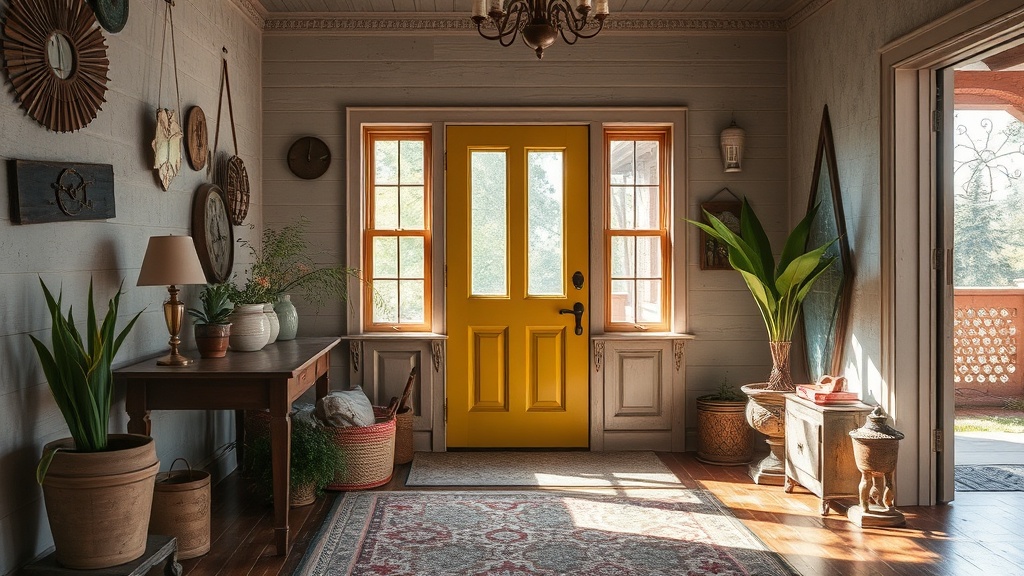
Create a Designer Entryway Using Found Objects and Paint

Do you ever walk through your front door and feel like the entryway is just a cluttered, uninspired transition zone rather than a welcoming statement? This guide shows you how to turn a boring mudroom or hallway into a high-end designer space using nothing more than thrifted finds and a few cans of paint. We're focusing on high-impact visual changes—like statement walls and sculptural decor—that cost a fraction of what you'd pay at a high-end furniture-only showroom.
How Do You Create a High-End Look with Thrifted Items?
You create a high-end look by selecting items with interesting silhouettes and then unifying them with a consistent color palette. Instead of buying a matching set of "entryway furniture" from a big-box retailer, look for pieces with character. A vintage wooden bench, a heavy brass tray, or an oversized ceramic vase can feel much more expensive if they share a common design language.
When I'm out at the local Goodwill or even the Environmental Protection Agency-approved recycling centers, I'm not looking for "pretty" things. I'm looking for shape. A lamp with a weird, architectural base might look dated in its original finish, but with a quick coat of matte black spray paint, it becomes a mid-century modern icon.
Here is a quick checklist of what to look for when hunting for entryway pieces:
- Texture over Pattern: Look for woven baskets, stone bowls, or textured ceramics.
- Structural Integrity: A heavy wooden stool is better than a flimsy plastic one, even if it needs a sanding.
- Scale: Don't be afraid of big. One large, dramatic piece of art is better than five tiny, cluttered ones.
That said, don't just grab anything. You need a plan. If you want a way to organize your gear without it looking like a pile of shoes, consider a dedicated console table. You can find these at any thrift shop—just look for the ones with solid wood construction. If you've already worked on your kitchen, you might appreciate how these textures play off other rooms. Check out my previous work on transforming a dated kitchen with metals and textures to see how a consistent material palette works across a home.
What Are the Best Paint Techniques for an Entryway?
The best paint techniques for an entryway involve using color to create depth through color-blocking, mural-style brushwork, or textured finishes. Paint is the cheapest tool in your arsenal—sometimes a single quart of high-quality paint can change the entire vibe of a room.
If your entryway feels small or dark, don't just stick to "safe" colors like beige. A deep, moody navy or a rich forest green can actually make a space feel more expansive and intentional. I love using a technique called "color drenching," where you paint the walls, the baseboards, and even the door the same color. It's a trick I learned from my parents, who used to paint old wooden cabinets to make them look brand new. It creates a seamless, expensive-looking architectural effect.
If you want to get a bit more adventurous, try a stencil or a lime wash. A lime wash gives you that soft, old-world plaster look that is currently very popular in high-end European design. You can find information on the chemical properties of lime-based finishes through Wikipedia if you want to get technical about the durability and breathability of your walls.
Entryway Paint and Texture Comparison
| Technique | Difficulty Level | Vibe/Style | Best For |
|---|---|---|---|
| Solid Color Drenching | Easy | Modern/Minimalist | Small, narrow hallways |
| Limewash/Plaster Effect | Medium | Old World/Organic | Creating texture on flat walls |
| Color Blocking | Medium | Art Deco/Eclectic | Defining a console area |
| Metallic Accents | Easy | Glam/Sophisticated | Highlighting trim or old frames |
How Much Should You Spend on Entryway Decor?
You should spend as little as possible on the actual "objects" and save your budget for high-quality paint and hardware. The goal is to find a $5 item and make it look like a $50 item. This is where the real "designer" work happens.
Let's look at a real-world example. A standard entryway setup might look like this:
- The Foundation: A thrifted wooden console table ($15 - $30).
- The Statement: A large, vintage gold-framed mirror from a yard sale ($10).
- The Texture: A ceramic bowl for keys and a woven basket for shoes ($5 total).
- The Finishing Touch: A high-quality matte black spray paint for the legs ($7).
Total cost: Under $60. A similar look at a boutique home store would easily run you $400 or more. (And honestly, the thrifted version has way more soul anyway!)
One thing to keep in mind: hardware is a massive giveaway of a "cheap" piece. If you find a beautiful vintage cabinet for your entryway, don't settle for the old, tarnished knobs. Go to a hardware store and buy some heavy, solid brass pulls or even modern matte black handles. It's a tiny expense that makes a huge difference in how the piece feels when you touch it.
It's worth noting that you don't need to redo the whole room at once. If you're feeling overwhelmed, start with one single surface. Maybe it's just the console table. Once you see how much a fresh coat of paint and a new set of handles can do, you'll be hooked. This is the same mindset I use when I'm looking for ways to transform my home without breaking the bank.
When you're out hunting for these pieces, keep an eye out for weight. Heavy items—even if they are slightly dented or scratched—usually have better construction. A heavy marble tray from a thrift store will look much more "designer" than a lightweight plastic one, even if the plastic one is brand new. The weight provides a sense of permanence and luxury that light, cheap materials just can't mimic.
If you're working with a very small space, avoid large, bulky furniture. Instead, look for "floating" elements. A wall-mounted shelf or a slim pedestal table can provide a surface for your "found objects" without blocking the walking path. This keeps the entryway feeling airy and intentional rather than cramped.
Don't forget the lighting. If you find a vintage lamp with a unique shape, don't be afraid to swap out the shade for something more contemporary. A sculptural, mid-century lamp paired with a modern, linen shade is a classic designer move. It creates a beautiful layer of light that makes the entryway feel warm and inviting the moment you walk in.
Steps
- 1
Select a Statement Paint Color
- 2
Source a Secondhand Console Table
- 3
Layer Textures with a Rug and Basket
- 4
Add Vertical Interest with Wall Art